
Available now
Collect
Plan fieldwork, capture it offline on a phone, and keep every seed lot joined to the plant, place and permission it came from.
Explore CollectCollect · Grow · Restore
Seed collection, nursery production and restoration planting on one record — so what goes in the ground still names the seed it came from.
No credit card · One active project freeThree hubs, one record
Each hub covers one stretch of that chain, on the same organisations, sites, species and people. All three are open, and every plan includes all three. The chain was built as one record from the start.

Available now
Plan fieldwork, capture it offline on a phone, and keep every seed lot joined to the plant, place and permission it came from.
Explore CollectAvailable now
Nursery production, stock and sales. Sowing draws from the seed lot, so a batch on the bench still knows where its seed was collected.
Explore GrowAvailable now
Zones, planting plans and planting records. A planting consumes the batches that went in the ground, and still points back down the chain to the seed.
Explore RestoreThe record you have now
The collection happened months ago. The evidence is spread across a phone, a notebook, a shared drive and somebody's memory. It can usually be reconstructed, but only by the person who was there, and only if they still work here.
Inside Collect · in the collector's hand
The job, the plant list and the photo prompts are all on the phone, in a shape the person holding it can work at speed.
The job, the sites and the species list are already on the phone.
Save to the device first, then sync when reception returns.
Every position is saved with how precise the fix was, in metres.
Prompts in the moment for the shots that make a record usable later.
Record what was collected and what the plant was doing.
A revisit lands on that plant's history, alongside every earlier visit.
Change a form whenever you need to. Past records keep the form they were captured on.
One screen for what is waiting, what is done, and anything that needs you.
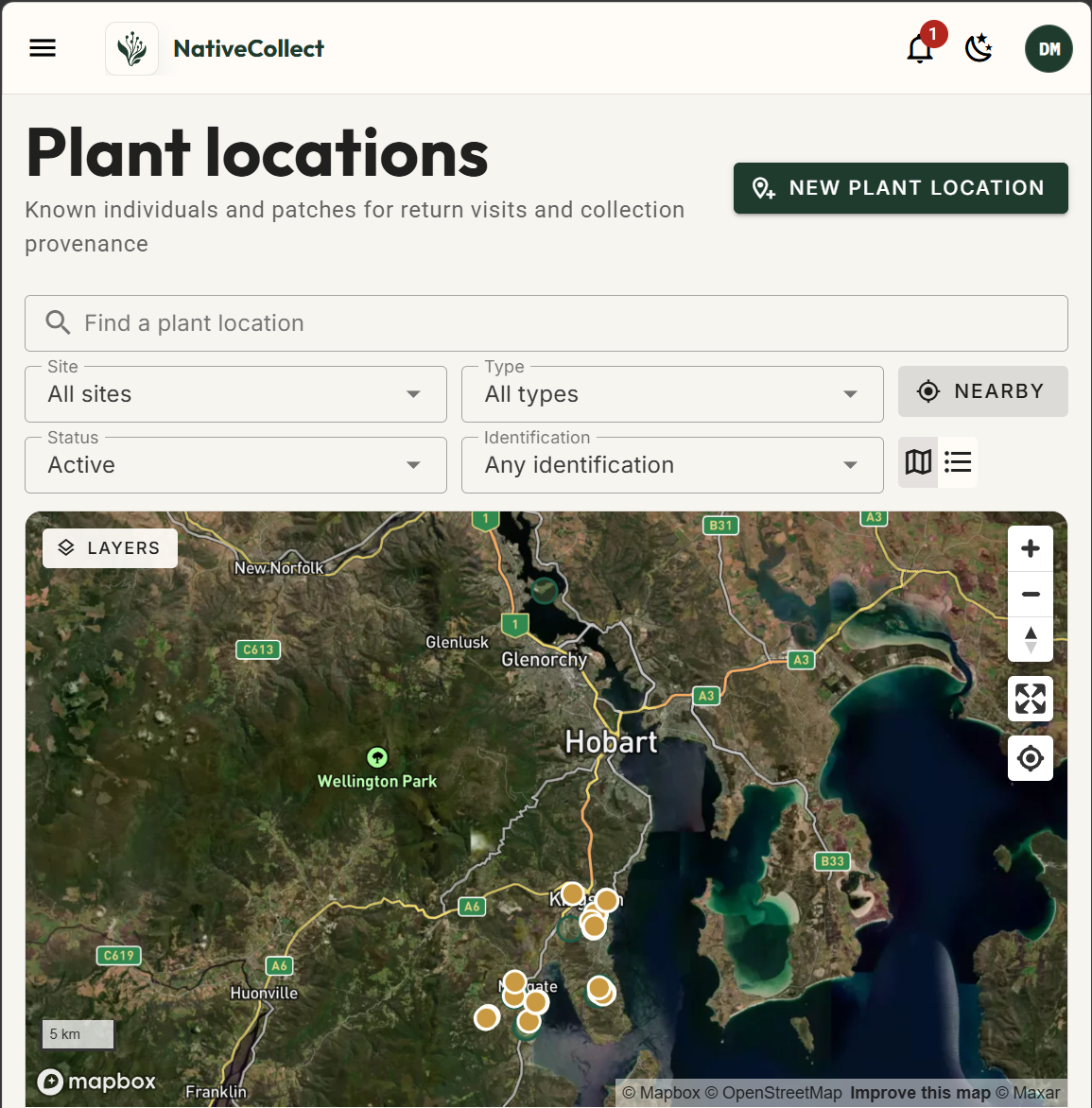
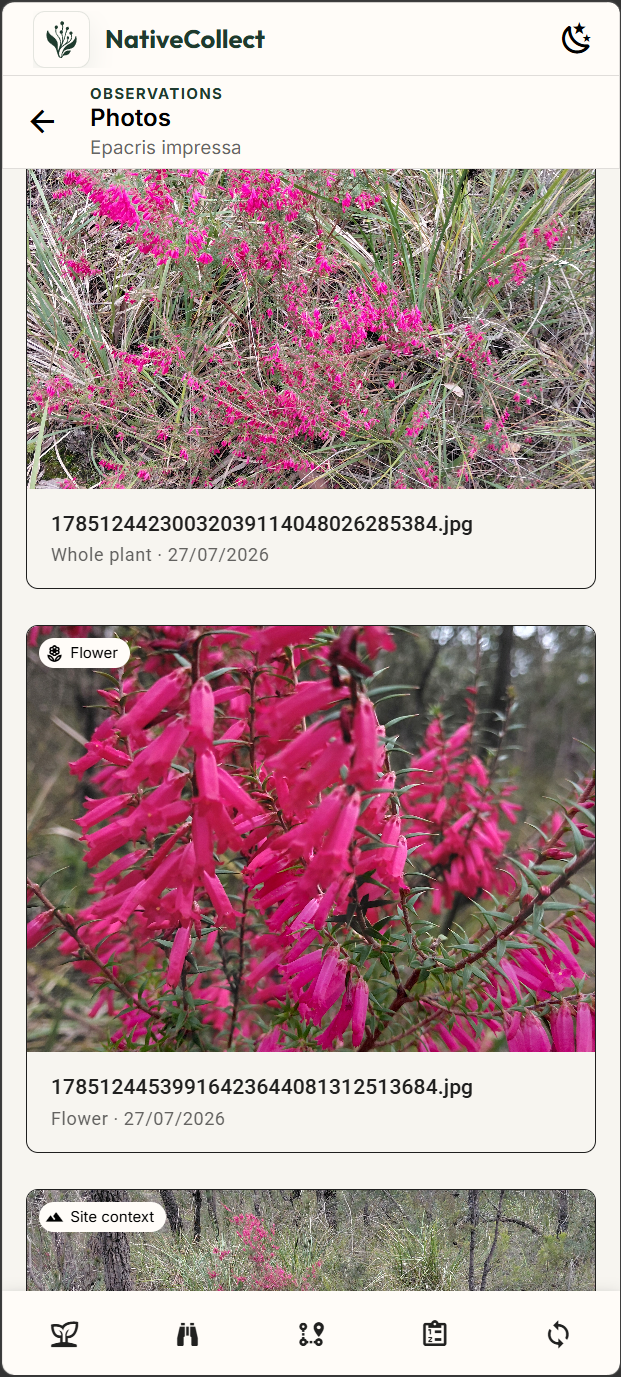
Real product · Field to office
Inside Collect · a collection day
One record follows the work, even when responsibility moves between the office, the field and the seed store.
Prepare sites, species targets, timing and permission evidence.
Explore planningCapture the field record offline with GPS and guided photos.
Explore field captureReview the work and keep its source attached to the seed lot.
Explore manage & traceSites, species and permission prepared
GPS · 4 m accuracy · 5 photos
Submitted by A. Collector
18.4 kg · source attached
Connected provenance
A useful record carries the relationship between plant, place, permission, collection and lot. NativeFlow holds those links open, so you can still walk back up them years later.
Australian field reality
Species names, taxonomy and occurrence data come from the Atlas of Living Australia.
Sourcing, collection, processing, testing and storage follow the chain set out in the Florabank Guidelines, the national reference for native seed collection and use.
Approvals and their supporting files stay visible beside the work they cover.
Your organisation controls who can view exact plant coordinates and original photo metadata.
Every hub captures work on a phone with no signal, because that is where most of this work happens.
Readiness signals name their source. NativeFlow records the decision; the ecological and legal judgement stays yours.
Native-seed stewardship
Native seed may support seed banking, research, cultural practice, revegetation, nursery supply or other work. Whatever the seed is for, the record is the same: a durable, reviewable account of what happened.
See who uses NativeFlowTrust in the record
Simple annual plans
One plan covers the organisation. Free is not a timed trial, and every plan includes offline field capture.
Try NativeFlow on one real project.
A$0forever
No card, no expiry
2 people · 1 active project
Start freeRecommended start
For a sole trader or small partnership.
A$300per year
About A$25 a month, billed yearly
3 people · 5 active projects
Choose SoloFor a team or consultancy working across several sites at once.
A$800per year
About A$67 a month, billed yearly
10 people · 25 active projects
Choose TeamFor established native-seed operations and larger programmes.
A$2,000per year
About A$167 a month, billed yearly
30 people · unlimited projects
Choose BusinessYour next collection
Prepare the work, take it offline and keep the record connected through handoff.
No credit card · One active project free